A Resiliency-Focused Open-Source Power Grid Model for New Jersey and PJM to Improve Resilient and Climate-Aware Energy Policy and Planning
This project will provide a transparent, data-driven foundation for climate-resilient and policy-relevant energy planning in New Jersey by enabling quantitative analysis of how climate stressors, infrastructure investments, and policy decisions affect power grid reliability. To support this goal, the project advances the development of an open-source, high-resolution model of the New Jersey power grid embedded within the PJM regional system, designed specifically for resilience and climate-impact studies.
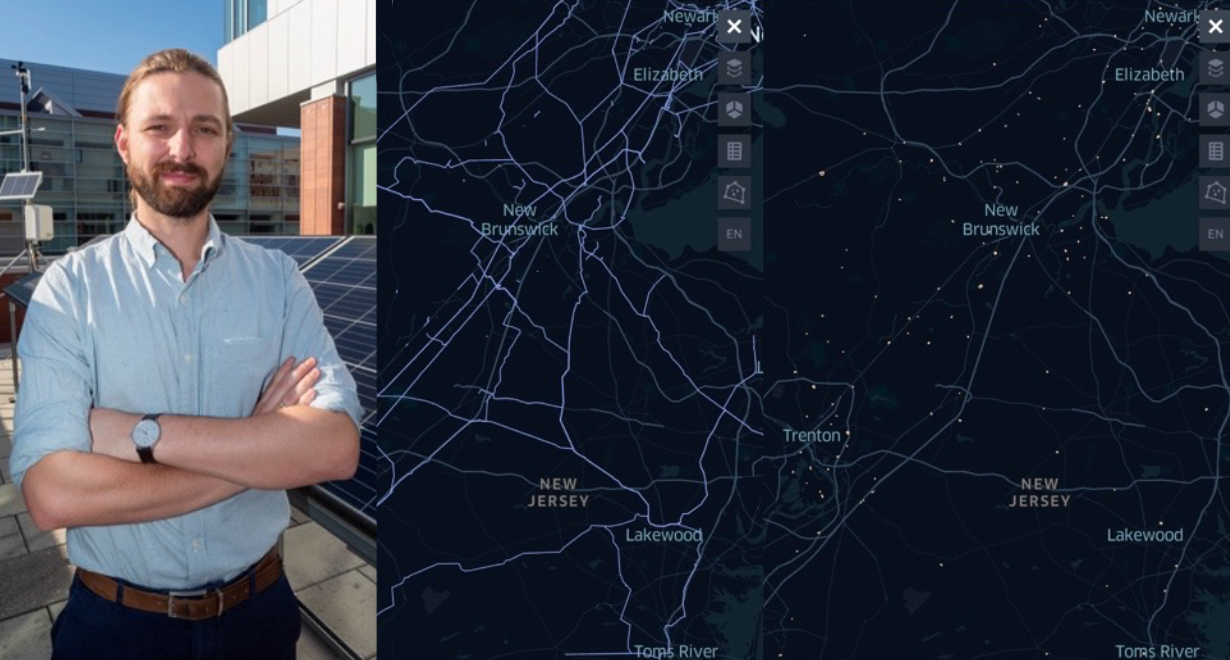
The work is led by Robert Mieth, Assistant Professor in the Department of Industrial and Systems Engineering at Rutgers University. It proceeds in parallel with Mieth’s ongoing open-source grid modeling effort supported by a Rutgers Climate and Energy Institute Groundwork grant and extends it by enhancing geographic fidelity, integrating climate and hazard data, and enabling detailed power flow-based assessments of extreme weather risks, electrification-driven load growth, and renewable integration. By combining transmission network data with climate, infrastructure, and demographic information, the model will allow researchers, planners, and public stakeholders to evaluate mitigation and adaptation strategies in a transparent and reproducible manner.
All models, data pipelines, and documentation will be released publicly as open-source resources and will be accompanied by tutorials and policy-relevant example analyses. Results will be disseminated through a public webinar hosted in collaboration with NJCCRC to engage state agencies, researchers, and other stakeholders. Together, this effort strengthens New Jersey’s capacity for evidence-based climate and energy decision-making while laying the groundwork for future resilience-focused research and planning initiatives.