Historical Water Bodies, Combined Sewer Overflow, and Flood Vulnerability in New Jersey
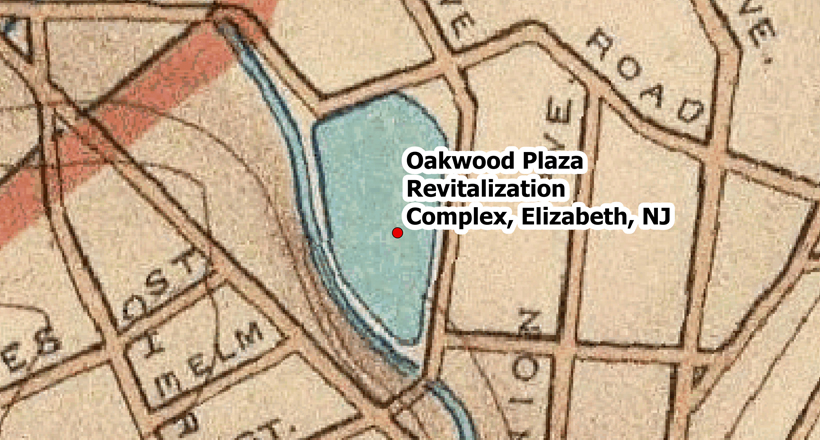
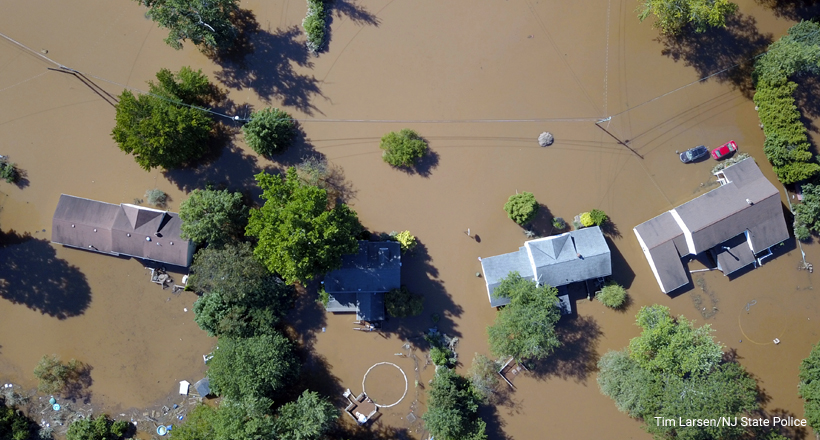
As urban areas have developed in New Jersey, some water bodies such as ponds, streams, and wetlands have been filled in, developed over, or rerouted through stormwater systems. In some cases, this process may have increased local flooding. In addition, rerouting surface water into stormwater systems has increased the amount of water flowing through these systems. During heavy precipitation events, this may increase the likelihood of combined sewer overflow (CSO) events, during which stormwater and wastewater flow untreated into local waterways. In some cases, returning these altered water bodies to their previous state may help reduce local flood vulnerability and CSO events (Morrison, 2023).
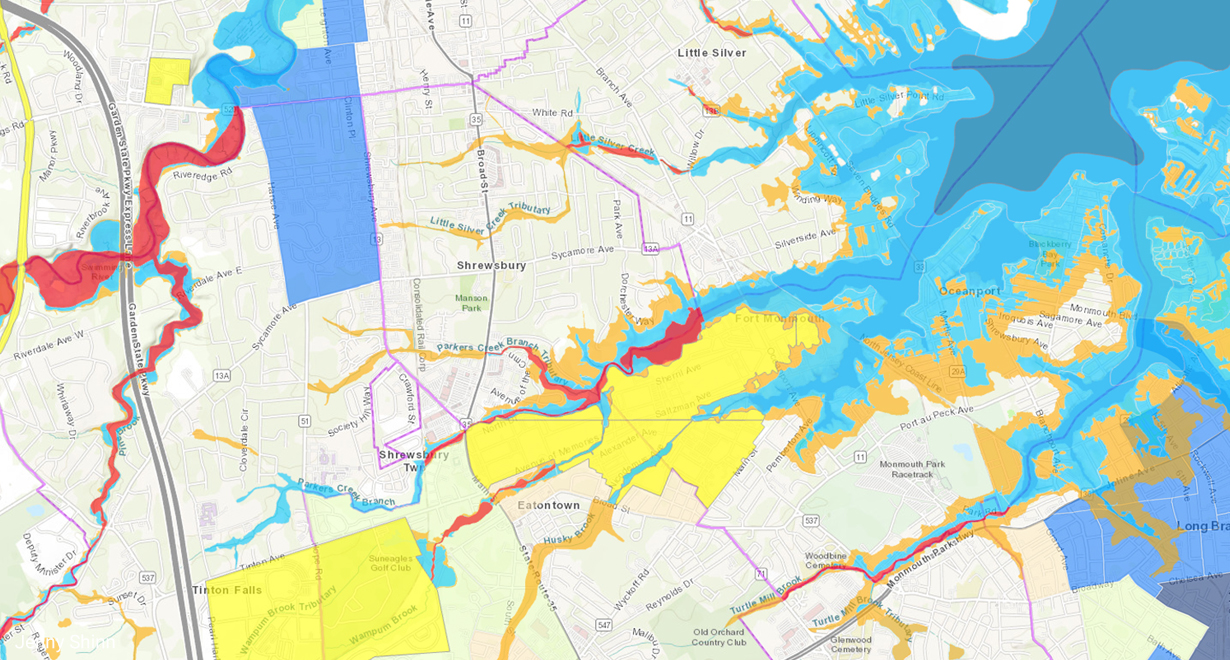
The purpose of this proposed project is to identify and create a dataset of historical water bodies in New Jersey that have been altered by human development, with a focus on areas with a history of flooding and areas with combined sewer overflow (CSO) systems. The dataset produced by this proposed project may be used to inform policy initiatives aiming to reduce CSO events and local flood vulnerability through nature-based solutions in New Jersey as well as policies aiming to prevent development in or relocate development out of flood-prone areas in the state.